

3 Benefits of Pulsed Lighting
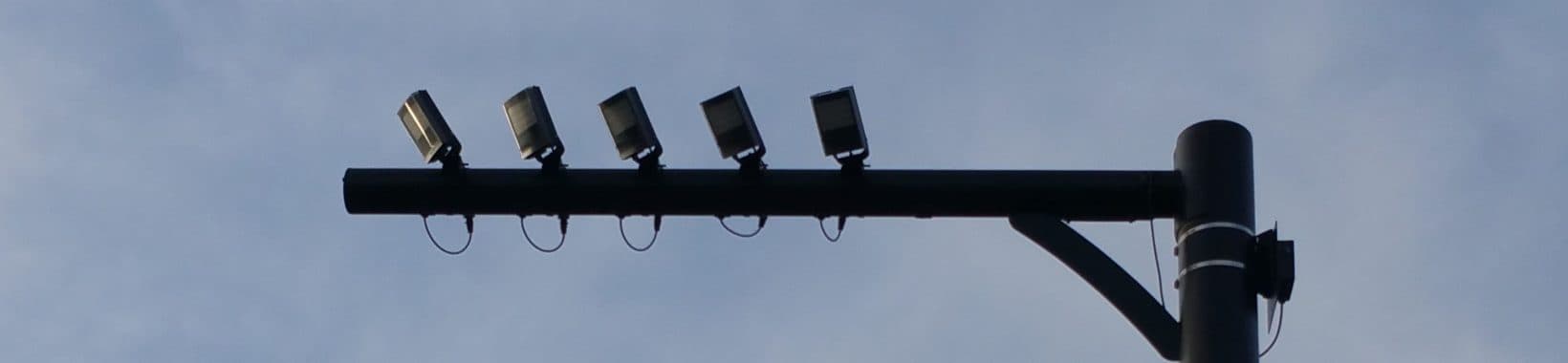
Pulsed lighting has become an important technology for transport, traffic enforcement and intelligent transport systems where accurate imaging of fast-moving vehicles is essential.
Unlike conventional LED lighting that operates continuously, pulsed lighting delivers a short burst of high-intensity illumination that is synchronised with a camera’s exposure. This provides significantly higher light output when it is needed, while reducing power consumption and heat generation.
The result is improved image quality, lower operating costs and a longer service life, making pulsed LED lighting an ideal solution for applications such as automatic number plate recognition (ANPR), licence plate recognition, traffic monitoring and tolling systems.
What is Pulsed Lighting?
Pulsed lighting is a method of driving LED illuminators at a much higher output for a very short period of time rather than operating continuously.
The illuminator is synchronised with the camera, producing a pulse of light only while the camera sensor is capturing an image. Because the LEDs are only active for a fraction of the operating cycle, they can safely produce a much higher light output than a constant illumination system.
This approach allows transport cameras to capture sharp, well-illuminated images of fast-moving vehicles without increasing average power consumption.
3 Benefits of Pulsed Lighting
1. More Light When It Matters
One of the biggest advantages of pulsed lighting is the ability to produce significantly more light during each pulse. Raytec pulsed illuminators typically deliver up to 400% more output than a standard constant illumination LED for the duration of the pulse.
The lifetime of an LED is governed by its average operating temperature rather than the number of times it switches on and off. Since pulsed illuminators operate for only a small proportion of the duty cycle, they can safely deliver much higher peak output without exceeding thermal limits.
For transport applications, this higher intensity illumination helps cameras capture clearer images of vehicles travelling at speed, improving identification accuracy and overall system performance.
2. Lower Running Costs
Pulsed LED lighting only consumes power while each pulse is active. Compared with continuous illumination, the duty cycle is significantly lower, reducing the total amount of energy required to operate the illuminator.
Lower power consumption offers several advantages:
- Reduced operating costs
- Lower energy usage
- Less heat generation
- Greater system efficiency
These benefits become increasingly important across large transport networks where multiple illuminators operate continuously throughout the day and night.
3. Longer Operational Life
LED lifetime is primarily determined by operating temperature.
Because pulsed illuminators spend much of their operating cycle inactive, average temperatures remain lower than with continuously operated lighting. Lower operating temperatures reduce stress on LED components and help maintain consistent performance over time. This enables pulsed lighting systems to deliver an exceptionally long operational life while reducing maintenance requirements and whole life costs.
Why Pulsed Lighting is Ideal for ANPR
Pulsed lighting is widely used in automatic number plate recognition (ANPR) systems because it delivers intense illumination precisely when the camera captures an image. The short, high-intensity pulse helps cameras record sharp licence plate images while minimising motion blur, even when vehicles are travelling at high speeds.
Synchronising the illuminator with the camera also improves image consistency and reduces unnecessary energy consumption compared with continuous lighting. For applications including traffic enforcement, tolling, access control and smart transport infrastructure, pulsed lighting provides the performance needed for reliable vehicle identification.
Typical Applications for Pulsed Lighting
Pulsed lighting is commonly specified for:
- Automatic number plate recognition (ANPR)
- Licence plate recognition systems
- Traffic enforcement cameras
- Average speed cameras
- Tolling systems
- Intelligent transport systems
- Junction monitoring
- Bus lane enforcement
- Red light enforcement
- Vehicle access control
Why Choose Raytec Pulsed Lighting?
Raytec has developed pulsed LED lighting specifically for demanding transport applications where image quality and reliability are critical.
Designed to integrate with leading transport cameras, Raytec pulsed illuminators provide high-intensity illumination, low power consumption and long operational life. The ability to synchronise precisely with camera exposure helps deliver clear images of fast-moving vehicles while keeping operating costs to a minimum.
FAQs
What is pulsed lighting?
Pulsed lighting is a method of driving LED illuminators so they emit short bursts of high-intensity light synchronised with a camera rather than operating continuously.
What are the benefits of pulsed lighting?
Pulsed lighting provides higher peak light output, lower energy consumption, reduced heat generation and a longer operational life compared with constant illumination.
Why is pulsed lighting used for ANPR?
Pulsed lighting produces intense illumination exactly when the camera captures an image, helping to improve licence plate recognition and reduce motion blur on fast-moving vehicles.
Is pulsed lighting more energy efficient?
Yes. Because the illuminator only operates during each pulse, it consumes less energy than a comparable continuously illuminated system while still delivering high peak output.